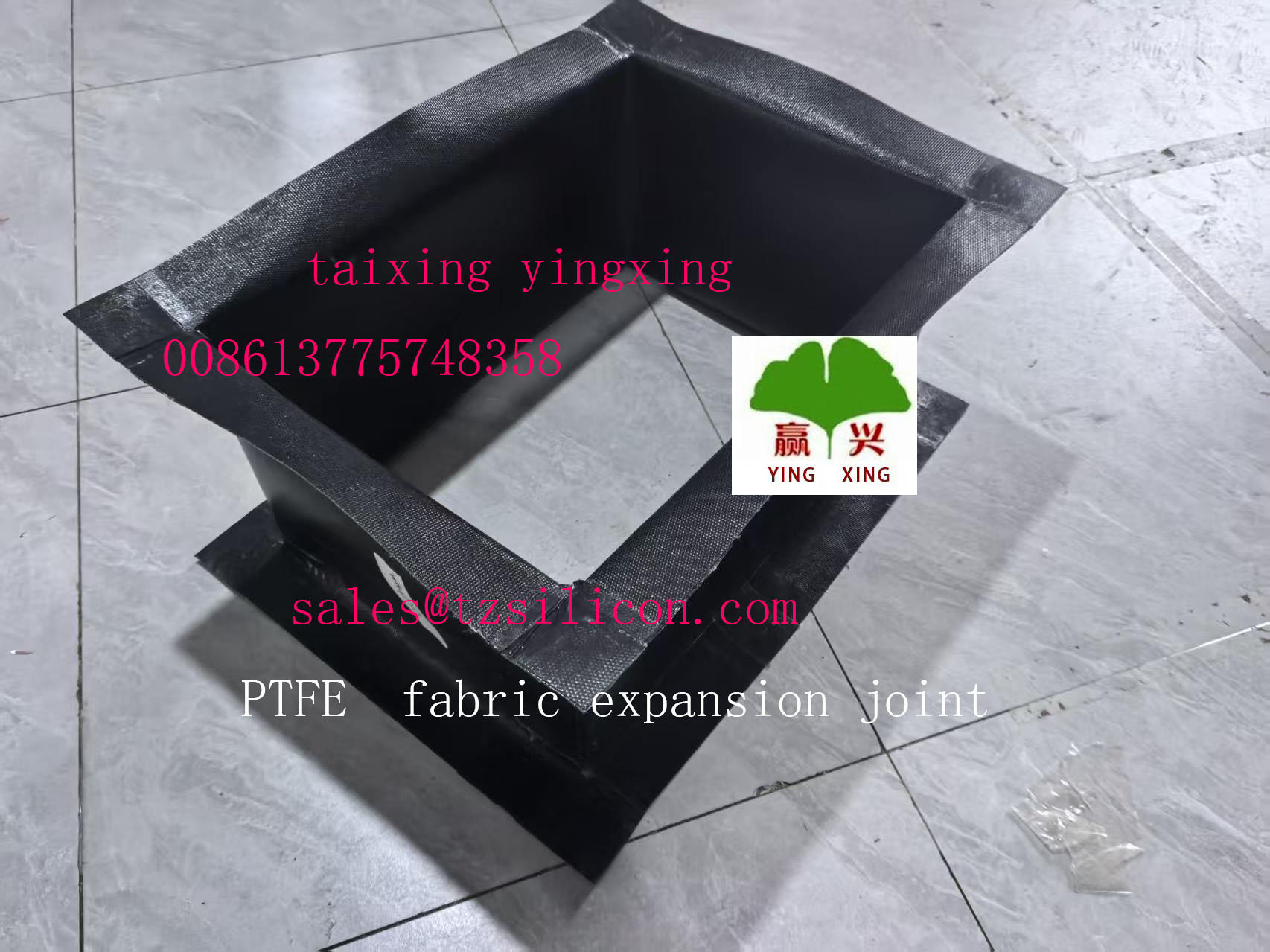
In the semiconductor industry, Teflon flexible connectors are popular because they simultaneously address several extremely stringent 'world-class challenges' in the manufacturing process.
With near-perfect chemical inertness, ultra-high purity, and excellent temperature resistance and buffering properties, Teflon flexible connectors play the role of a 'guardian' in multiple critical stages such as chemical delivery, high-purity vacuum systems, and precision bonding processes. They ensure the semiconductor manufacturing process—the most precise and sensitive production process on Earth—can be completed safely and without contamination.
· Resisting strong corrosion: Chemicals used in semiconductor manufacturing, such as hydrofluoric acid and aqua regia, rapidly corrode metals. Teflon (PTFE) reacts with almost no known chemicals, effectively protecting equipment from corrosion, preventing contamination, and ensuring stable production.
· Ensuring zero pollution: Circuit structures measuring just a few tens of nanometers are highly sensitive to contaminants. Teflon flexible connectors have high inherent purity and do not leach metal ions or particles into ultra-pure chemicals, ensuring defect-free lines and improving product yield.
· Withstanding large temperature ranges: From low-temperature processes at -200°C to high-temperature steps at 260°C. Teflon flexible connectors can endure extreme deep cold and high deposition/etching temperatures simultaneously while maintaining stability and effectiveness.
· Intelligent buffering: Leveraging its flexibility, it can absorb pipeline vibrations and compensate for equipment installation errors. Additionally, as a flexible buffer membrane, it balances bonding pressure to ensure uniform force application and prevent chip breakage.